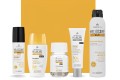


The Sun is a source of life, and sun exposure promotes a sense of physical and mental well-being, in addition to bringing health benefits. However, the negative consequences for the skin are a reality we must understand.
Vitamin D production is one of the main benefits of the Sun and is linked to a protective effect against internal cancers and other diseases, which is why unprotected daily exposure of at least 20 minutes is recommended, avoiding peak heat hours.
Excessive and unprotected sun exposure can trigger acute, immediate effects as well as cumulative long-term consequences on the dermatological, ocular, and immune system levels.
A suntan, despite being desired by most people, is actually a sign of skin damage, as the sun interferes with melanin production and distribution. Depending on skin characteristics, exposure to UV radiation can trigger erythema, which manifests as a sunburn.
Certain dermatological conditions, such as atopic dermatitis and rosacea, can be aggravated by uncontrolled exposure and lead to allergic reactions. Sun allergies occur due to changes in sun-exposed skin; the immune system reacts to sunlight, triggering a skin rash and, in rare cases, hives or small blisters that can spread to non-exposed areas.
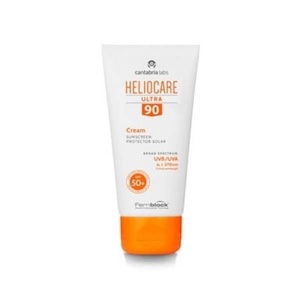
We recommend Heliocare Ultra 90 Cream SPF50+.
Solar radiation can also lead to eye irritation and conjunctivitis. Cold sores (herpes) can be triggered and exacerbated by sun exposure, and certain medications are associated with photosensitivity, such as antibiotics and immunosuppressants, requiring special caution during treatment.
In the long term, there are several negative consequences of excessive, unprotected sun exposure. At the dermatological level, besides premature photoaging, hyperpigmentation, and telangiectasias, the development of pre-malignant and malignant lesions (melanomas and carcinomas) is the most serious consequence of UV exposure. At the ocular level, excessive exposure to UV radiation can lead to cataracts. At the immune level, changes in response mechanisms can compromise the autoimmune system. Discoid lupus manifests primarily on the skin, and sun exposure can trigger a flare-up.
The sun is the primary cause of 90% of skin cancers.
The frequency of skin cancer occurrence is closely linked to skin phototype and varies by geographical area.
We can distinguish several types of skin cancer, mainly classified as melanoma and non-melanoma, which include squamous cell carcinoma and basal cell carcinoma.
Melanoma is the leading fatal skin disease. Its incidence has been rising, even with a stable or declining mortality rate, which is linked to several factors: increased sun or ultraviolet (UV) light exposure, more outdoor activities, changes in clothing styles, increased longevity, ozone layer depletion, genetics, and, in some cases, immunosuppressive therapy. Due to the high mortality rate associated with melanoma, early diagnosis is essential.
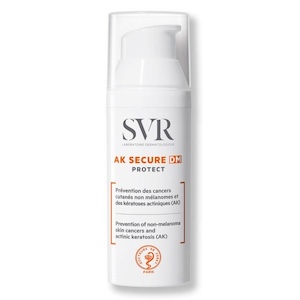
We recommend SVR AK Secure DM Protect.
How to Detect Melanoma
Melanoma is a change that occurs at the level of melanocytes, usually manifesting as a dark spot on the skin that can appear suddenly. It is important to monitor any skin changes, analyzing spots and moles while evaluating parameters such as asymmetry, border irregularity, color variation (pigmentation is not uniform in melanoma), and diameter (spots larger than 6 mm are a cause for concern).
The face is the most prone area for developing skin cancers, particularly on the lips, eyelids, and nose. The back of the hands is also heavily affected, especially in individuals who work outdoors.
Remember: limiting sun exposure time and applying sunscreen is your best defense against premature aging, hyperpigmentation, allergies, and skin cancer.
Explore thesun careproducts at Sofarma and take care of your skin!
Bbliography
- Moan, J., Porojnicu, A.C., Dahlback, A. and Setlow, R.B., 2008. Addressing the health benefits and risks, involving vitamin D or skin cancer, of increased sun exposure. Proceedings of the National Academy of Sciences, 105(2), pp.668-673.
- https://www.health.harvard.edu/a_to_z/sun-allergy-photosensitivity-a-to-z - acedido em 14/01/2019.
- Juchem, P., Hochberg, J., Winogron, A., Ardenghy, M. and English, R., 2001. Riscos à saúde da radiação ultravioleta. Revista Brasileira de Cirurgia Plástica, 13(2), pp.31-60.
- Tofetti, Maria Helena de Faria Castro, and Vanessa Roberta de Oliveira. "A importância do uso do filtro solar na prevenção do fotoenvelhecimento e do câncer de pele." INVESTIGAÇÃO6, no. 1 (2010).
- Sgardi, F.C., do Carmo, E.D. and Rosa, L.F.B., 2012. Radiação ultravioleta e carcinogênese. Revista de Ciencias Medicas, 16(4/6).